Back to Portfolio

Case Studies

A deeper look at some of the projects that have shaped my practice — the problems, the process, and the outcomes. Each case study reflects my analytical approach and the value of a neurodivergent perspective in complex business environments. As these were government projects, I am unable to share actual documentation.

Digital Transformation

Architecting Logic for a £100M Compliance Transformation

As a new Junior BA I had to up my game very quickly when dropped into this huge, 5 year project. Change requests, backlogs and a very demanding Lead BA.
UK Government
July 2021
6 months
Junior BA
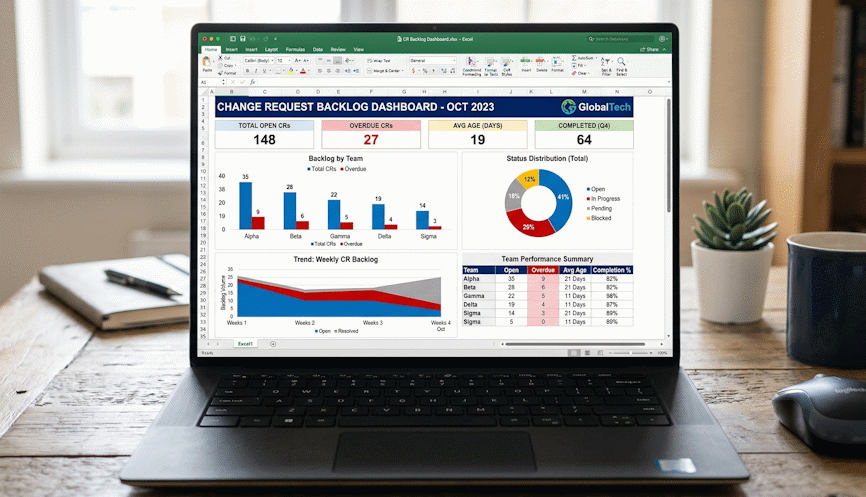
excel dashboard illustration

Background & Context

A major transformation programme to bring tax compliance into the 21st Century. I joined this project as a Junior BA, still learning the ropes, and dropped into a team with a Lead BA who had a vast knowledge, but expected the very best from her line of reports.

There were already thousands of requirements, and hundreds of change requests across multiple teams.

The Challenge

Massive Scale & Requirement Fragmentation
On a project of this magnitude—thousands of requirements and hundreds of change requests—the primary risk is "Data Decay." With dozens of teams and multiple IT suppliers, the project was at risk of losing logical consistency across silos, making it nearly impossible for Project Managers to see the true state of the backlog.

My Approach

The Analytical Edge: Pattern Recognition & Technical Autodidactism
Where others saw overwhelming spreadsheets, I saw a structural mapping challenge. Leveraging my natural affinity for systems logic, I:

  • Identified a Reporting Gap: Recognized that standard reporting couldn't bridge the data silos between disparate IT suppliers.
  • Self-Directed Integration: Taught myself Jira Query Language (JQL) to build custom queries that tracked cross-functional requirements, ensuring no logic was lost in translation between vendors.
  • High-Fidelity Standards: Under the mentorship of high-performance BAs, I mastered the art of drafting precise Change Requests that withstood the scrutiny of weekly stakeholder stand-ups.

Outcomes & Results

The Structural Solution: The Centralized Logic Dashboard

I didn't just track tasks; I built a Decision Support System. By leveraging advanced Excel modelling and JQL, I synthesized disparate team backlogs into a single, high-fidelity dashboard. This provided leadership with a "Single Source of Truth," allowing for real-time adjustments to project velocity.

The Outcome: A 40x Return on Investment

  • Revenue Impact: The system successfully launched, facilitating the collection of over £4 Billion in additional tax revenue.
  • Operational Velocity: The centralized dashboards transformed project management from "reactive firefighting" to "proactive steering."
  • Technical Integrity: Maintained 100% requirements traceability across multiple global IT partners.

40x
Return on investment
£50m
Annual savings
500+
FTE savings
100%
Requirements traceability

This was one of my very first projects as a BA, and it was the largest the organisation had ever undertaken. It's an understatement to say I was daunted by everything. The Lead BA was very demanding, but I soon realised she was leading me to my own successes, trusting in my judgement but questioning what I brought to her so that I could learn to justify my thinking behind what I had done. This led to me upping my game constantly. It felt difficult at the time, but proved invaluable to my progression. I learned that requirements traceability shouldn't be an afterthought, as my work on Jira and my CRs backlog dashboard saved so much time for managers and leads.

Back to Portfolio Overview
Requirements Engineering

Strategic Alignment & Risk Mitigation in Cyber-Security

My first experience in having to push back to stakeholders on requirements that couldn't be met. But, happy to be allowed to lead on technical aspects as the Senior BA wasn't as technically-minded as I am. Very interesting processes involved that I wish I could say more about.

Cyber Crime Investigation
Sept 2021
7 months
Junior BA
cyber security word cloud illustration

Background & Context

Government IT systems, especially financial ones, are subject to constant attack. It is, quite obviously, vital that they are able to defend and mitigate against such; which necessitates tools and methods that match those of bad actors.

The Challenge

Niche Requirements vs. Strict Governance
A high-stakes cybersecurity division required specialized tools to protect government IT systems. However, the initial "wish list" of niche software carried a significant price tag and potential conflicts with established security policies. The challenge was to meet the team’s operational needs without breaching budget constraints or regulatory guardrails.

My Approach

The Analytical Edge: Radical Objectivity & Principled Negotiation In a high-pressure environment with senior stakeholders, I applied a logic-first approach to requirement validation:

  • Objective Requirement Auditing: I deconstructed the "niche" requests to identify the core functional needs, separating "must-have" utility from "nice-to-have" features.
  • Principled Pushback: Despite the stakeholder's seniority and expertise, I provided a data-backed case for why the proposed solution was unviable due to budget limitations and policy violations.
  • Systems Thinking: Collaborating with a Lead Solution Architect, I performed a "cross-estate" audit to see if existing tools could be repurposed, rather than buying new ones.

Outcomes & Results

Strategic Consensus & Budget Preservation.

  • Cost Avoidance: Saved the department a significant capital outlay by eliminating the need for niche, redundant software.
  • 100% Policy Compliance: Ensured the final solution was fully aligned with stringent cybersecurity governance.
  • Stakeholder Buy-In: Facilitated a successful "pivot" for the team lead, turning a potential conflict into a magnanimous agreement on a more sustainable, secure path forward.
100%
Security policy compliance
£100k+
Capital outlay saved

This was where I learned the true value of a business analyst. It turns out I wasn't just there as a scribe, to note down requirements and map out processes. We should always be asking the right questions. I genuinely felt bad that we could not deliver on all requirements for all of the processes here, but it was in keeping with organisational governance for a public body that I was right to ask if what the business needed was both feasible and affordable, and if the solutions couldn't already be found on the IT estate.

Back to Portfolio Overview
Digital Transformation

Operational Recovery & Process Mapping for Global I/O Tendering

When everything seems to be way more complex than you thought, and the wheels start falling off... Don't Panic! Every project has it's blockers, annoyances and head-desk moments. These are the opportunities for the BA to shine! These are the anecdotes you'll be using in future job interviews.

UK Government Comms
Aug 2022
5 Months
Business Analyst
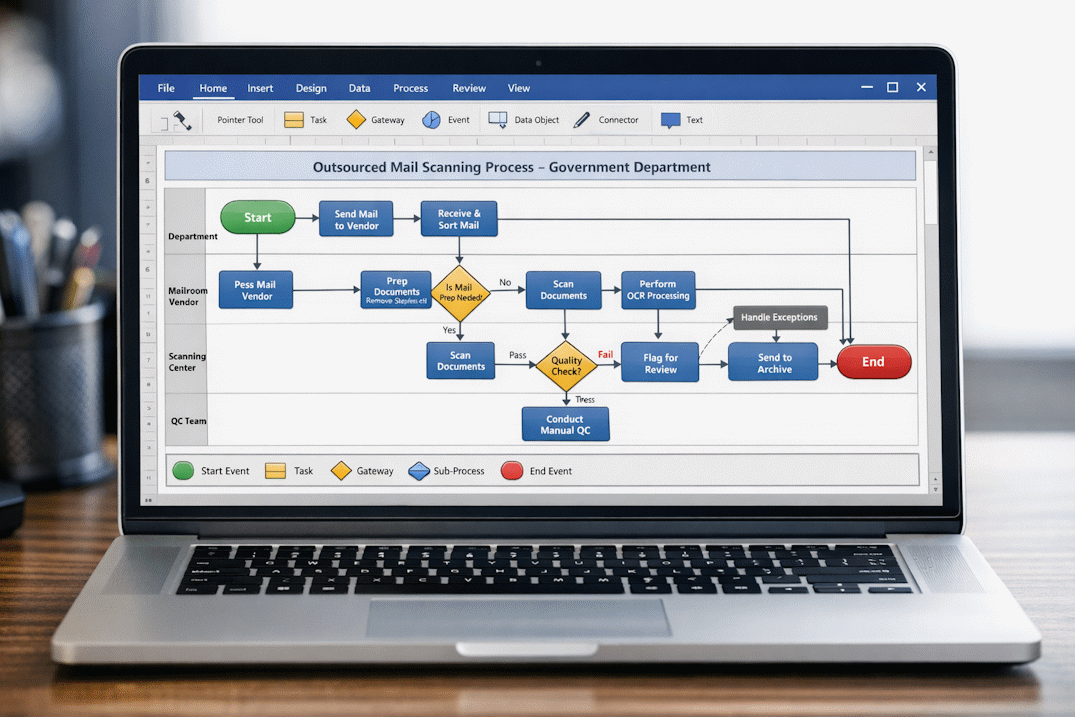
laptop with procress map illustration

Background & Context

A colleague and I were dropped onto this project, with no idea of the wider work going on. It soon became apparent that we were actually part of a much larger project convering the tendering of all of the organisation's I/O Comms. Email, print, scanning. All of it. And none of the current processes had ever been mapped. Oh, and my colleague was soon re-allocated to a different project!

The Challenge

High-Stakes Ambiguity & Resource Volatility
During a critical tender for the organisation’s entire Input/Output functionality (physical mail, scanning, digital comms), the project faced a documentation crisis. While high-level requirements existed, there were no formal "As-Is" process maps. The project was operating in a "documentation vacuum" with undefined stakeholders and an expanding scope of sub-processes. Mid-project, the team was reduced by 50%, leaving a massive technical debt to be cleared under a fixed deadline.

My Approach

Systemic Reconstruction & Forensic Discovery
When faced with a lack of structure, I engaged my "Forensic Analyst" mode to rebuild the project's logical foundation:

  • Stakeholder Forensic Work: I led a manual "discovery phase" to identify and map the network of Subject Matter Experts (SMEs) across the organization when no centralized list existed.
  • Complexity Deconstruction: I identified that what was initially presented as "simple I/O" actually consisted of dozens of hidden sub-processes and use cases. I categorized these into a logical hierarchy to prevent scope creep.
  • The Strategic Pivot: When my colleague was reassigned, I performed a "resource audit" of my own workflow, halting unproductive activity to regroup and prioritize high-impact workshops.

The Structural Solution: The Focused Workshop Framework
I transformed fragmented, low-fidelity information (PowerPoint sketches and anecdotal evidence) into formal Process Architecture. By tasking stakeholders with specific data-gathering "homework," I ensured that our workshops were not for discovery, but for validation. This cut through the noise and moved the project toward consensus rapidly.

Outcomes & Results

Documentation Integrity & Deadline Achievement

  • Successful Sign-Off: Despite the initial lack of data and a 50% reduction in staff, I delivered a complete, validated set of "As-Is" process maps ahead of schedule.
  • Tender Readiness: My documentation provided the necessary clarity for the organisation to proceed with a multi-million pound tender with confidence.
  • Clarity from Chaos: Replaced "administrative noise" with a structured, signed-off roadmap that became the "Single Source of Truth" for the I/O transition.
100%
Milestones and deadlines met

A valuable lesson in learning how to deal with the problems that arise on most projects. You never know what they will be, but after a while you realise that, actually, you CAN deal with them. Sometimes you have to halt what is happening and have the courage for a reset, It's better to take the time to get things back on track than deal with the potential train wreck later.

Back to Portfolio Overview
Data & Reporting

Strategic Data Integration & API Logic Architecture

This seemed quite a straightforward one when I picked it up, but complications can spring out at you from any direction, especially when working with other government departments.

Cross Government Collaboration
Mar 2024
3 months
Lead Business Analyst
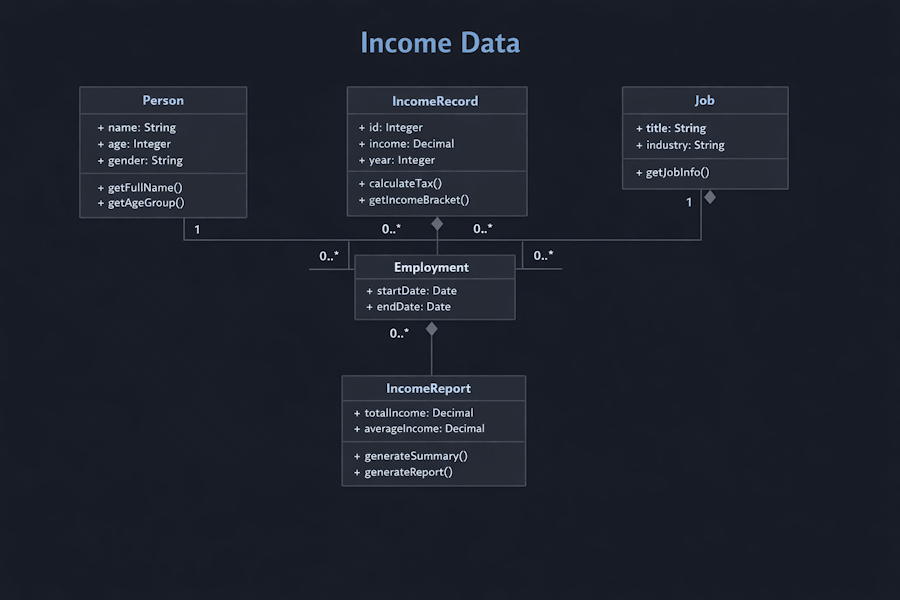
UML class diagram

Background & Context

Working with other government departments is usually quite fun, to be honest. Always great to swap notes on how we do things. Unfortunately, sometimes they conceptualise data in structure we just do not support. Then things get fun for the BAs on both sides! This project to share income data with another department to facilitate their calculation of eligibility for certain grants

Add additional background detail here as needed.

The Challenge

Structural Logic Mismatches in Inter-Departmental Data Sharing
In a high-stakes data-sharing initiative between government departments, a fundamental "Logic Gap" threatened the project’s viability. The requesting department required "Household-level" income data to facilitate grants, while the source data was architected strictly at the "Individual" level. Without a clear translation of these technical constraints, the project risked legal non-compliance and technical failure.

My Approach

High-Fidelity Visualization & Logic Modelling
I utilized a systems-thinking approach to resolve the discrepancy between policy goals and technical reality:

  • Scenario Mapping: I created comprehensive Customer Journeys to illustrate every possible data scenario allowed by the proposed scheme. This made the abstract "individual vs. household" blocker visible and undeniable to non-technical stakeholders.
  • Technical-to-Business Translation: I acted as the primary translator between the other department’s policy leads and our internal SMEs, explaining complex data formats and business rules in a way that drove consensus.
  • Meticulous Attribute Modelling: I engaged in deep-dive data modelling to define the specific elements and attributes required, ensuring that error-handling and authentication protocols were built into the logical design from day one.

The Structural Solution: The API Integration Blueprint
I architected the logical framework for a Memorandum of Understanding (MOU) that precisely defined the boundaries of the data sharing. I successfully shifted the responsibility of data collation (individual to household) to the requesting side, protecting the integrity of the source data while still enabling the business objective.

Outcomes & Results

Seamless Integration & Policy Realignment

  • Technical Success: The API was integrated smoothly with existing systems, featuring robust error-coding and standardized business rules.
  • Strategic Clarity: Eliminated the "Household Data" blocker by providing a clear, logical workaround that satisfied both legal MOUs and technical constraints.
  • Governance Alignment: Managed the complex dependencies of authentication and authorization, ensuring the project met all government data security standards.

Another time I had to push back against what some stakeholders wanted, but this time I had to ilustrate it with quality data mapping and customer/user journeys to highlight all of the potential outcomes.

Back to Portfolio Overview
The Autistic Business Analyst

© — All rights reserved. Built with Bootstrap 5.